
As a professional athlete, you understand the pursuit of perfection. Every training session, every match, every season is about pushing boundaries and achieving greatness. The same philosophy drove the creators of the most legendary supercars ever built: machines that didn't just transport people, but redefined what was possible on four wheels.
These classic supercars represent more than just automotive history; they're symbols of ambition, precision, and the relentless pursuit of excellence. For today's sports professionals, understanding these legends isn't just about appreciation: it's about recognising the DNA that still influences modern performance vehicles.
Released in 1987 as Ferrari's 40th anniversary celebration, the F40 remains the ultimate expression of Maranello's racing philosophy. With its twin-turbocharged V8 producing 478 horsepower and a kerb weight of just 1,100kg, this was supercar engineering stripped to its essence.
The F40's carbon fibre body panels, minimal interior, and race-derived aerodynamics created a machine that prioritised performance over comfort. For athletes who understand that peak performance often requires sacrifice, the F40's uncompromising approach resonates deeply. Its 0-60mph time of 3.8 seconds might seem modest by today's standards, but the pure, unfiltered driving experience remains unmatched.

What makes the F40 particularly significant is its timing: it arrived at the peak of the supercar wars of the late 1980s, setting benchmarks that manufacturers still reference today. For modern athletes considering classic supercars, the F40 represents the perfect marriage of racing heritage and road-going capability.
Few cars have captured imaginations like the Lamborghini Countach. Produced from 1974 to 1990, this angular masterpiece didn't just break design conventions: it obliterated them. The Countach's scissor doors, dramatic wedge profile, and aggressive stance made it the ultimate bedroom wall poster car.
Beyond its striking looks, the Countach delivered serious performance. The final LP5000 Quattrovalvole variant packed a 5.2-litre V12 producing 455 horsepower, capable of reaching 60mph in under 5 seconds. More importantly, it established Lamborghini's reputation for building cars that looked like they belonged on a racing circuit rather than a showroom floor.
For athletes, the Countach represents something profound: the courage to be different. While Ferrari focused on racing pedigree, Lamborghini created machines that were pure theatre. The Countach demanded attention and confidence: qualities every successful athlete understands.
The original Porsche 911 Turbo, internally known as the 930, arrived in 1975 and immediately earned a reputation as one of the most challenging supercars to master. With its rear-mounted, turbocharged flat-six engine producing 260 horsepower (later increased to 300hp), the 930 delivered explosive performance wrapped in a deceptively subtle package.
The 930's nickname "Widow Maker" came from its tendency to punish inexperienced drivers with sudden oversteer, particularly when lifting off the throttle mid-corner. But for those who learned to work with the car's unique characteristics, the 930 delivered one of the most rewarding driving experiences ever created.

This philosophy mirrors athletic performance perfectly. The most rewarding achievements often come from mastering difficult techniques, and the 930 demanded respect, skill, and commitment. Modern athletes who appreciate the value of dedicated practice and gradual mastery will find kindred spirit in the 930's demanding nature.
When McLaren decided to build the ultimate road car in the early 1990s, they didn't just aim to create the fastest supercar: they set out to build the perfect one. The result was the F1, a machine that still holds relevance decades after its debut.
The F1's BMW-sourced 6.1-litre V12 produced 618 horsepower, propelling the car to a top speed of 241mph: a record that stood for over a decade. But the F1's true genius lay in its details: the central driving position, gold-lined engine bay for heat reflection, and an obsessive focus on weight reduction that resulted in a kerb weight of just 1,138kg.
Only 106 McLaren F1s were ever built, making it one of the most exclusive supercars in history. For athletes who understand that the pursuit of perfection often requires going against conventional wisdom, the F1 represents the ultimate achievement. Its creators didn't focus group their decisions or compromise their vision: they simply built what they believed was right.
The Ferrari Testarossa, produced from 1984 to 1996, became the defining supercar of the 1980s excess. Its distinctive side strakes, wide stance, and flat-twelve engine made it instantly recognisable, while its appearance in Miami Vice cemented its place in popular culture.
The Testarossa's 4.9-litre flat-twelve engine produced 390 horsepower, delivered through a smooth, linear power band that made it surprisingly accessible for a supercar. Unlike the raw aggression of the F40, the Testarossa offered grand touring capability wrapped in exotic styling.
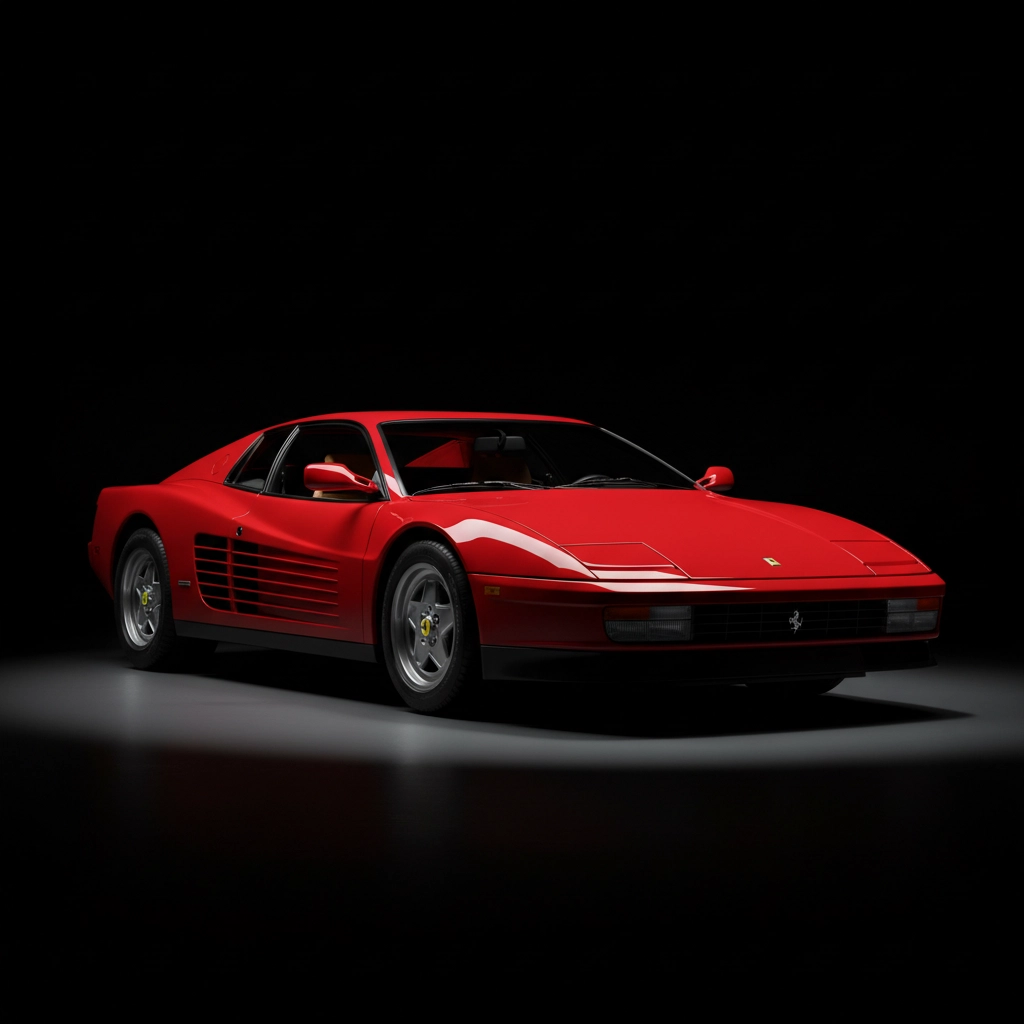
For athletes, the Testarossa represents the importance of image and presence. Sometimes success isn't just about raw performance: it's about commanding respect and attention. The Testarossa achieved this perfectly, offering enough performance to satisfy purists while remaining approachable enough for regular use.
Understanding these classic supercars provides valuable context for today's automotive landscape. Modern supercars like those in Premiership Automotive's current collection carry the DNA of these legends forward, combining their pioneering spirit with contemporary technology and refinement.
The pursuit of automotive excellence mirrors athletic achievement in many ways. Both require vision, dedication, and the willingness to push beyond accepted limitations. The engineers and designers who created these classics were athletes in their own right: competing against physics, convention, and each other to achieve something extraordinary.
For modern sports professionals, these classics offer something contemporary supercars sometimes lack: character. Each of these machines had distinct personalities, quirks, and characteristics that demanded driver involvement. They weren't just fast: they were engaging, challenging, and rewarding in ways that modern technology sometimes smooths away.
While owning these classics requires significant investment and ongoing commitment, experiencing them doesn't have to be out of reach. Many of these legendary supercars influence modern designs and engineering philosophies, making their spirit accessible through contemporary alternatives.
At Premiership Automotive, we understand that today's athletes want access to automotive excellence without the complexities of ownership. Our flexible access solutions provide ways to experience the pinnacle of automotive achievement while maintaining the flexibility that professional sports careers demand.
The lessons these classic supercars teach: about commitment to excellence, the courage to be different, and the rewards of mastering challenging machinery: remain as relevant today as when these legends first shocked the automotive world. They remind us that the greatest achievements come not from following conventions, but from having the vision and determination to create something extraordinary.
Whether you're drawn to Ferrari's racing heritage, Lamborghini's theatrical flair, Porsche's engineering excellence, or McLaren's pursuit of perfection, these legends continue to inspire both automotive enthusiasts and anyone who appreciates the relentless pursuit of greatness.


